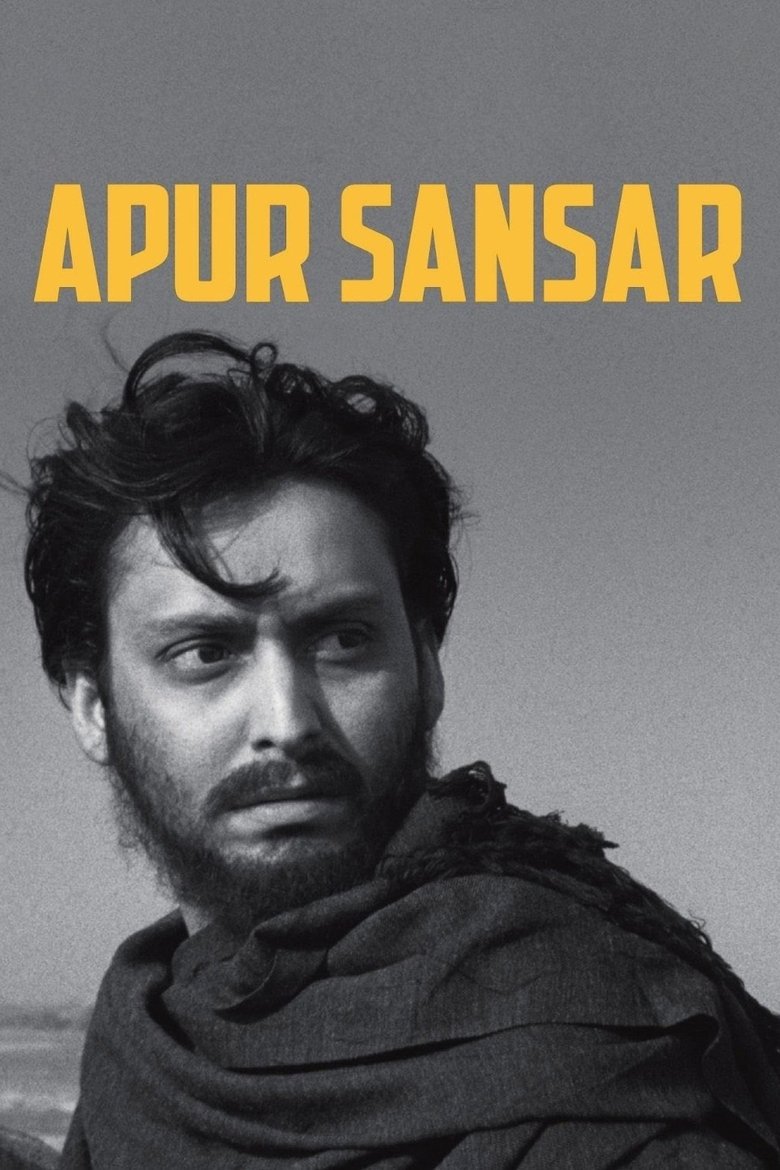
The World of Apu
Apu, now a jobless ex-student dreaming vaguely of a future as a writer, is invited to join an old college friend on a trip up-country to a village wedding.

CinemaSerf@Geronimo1967
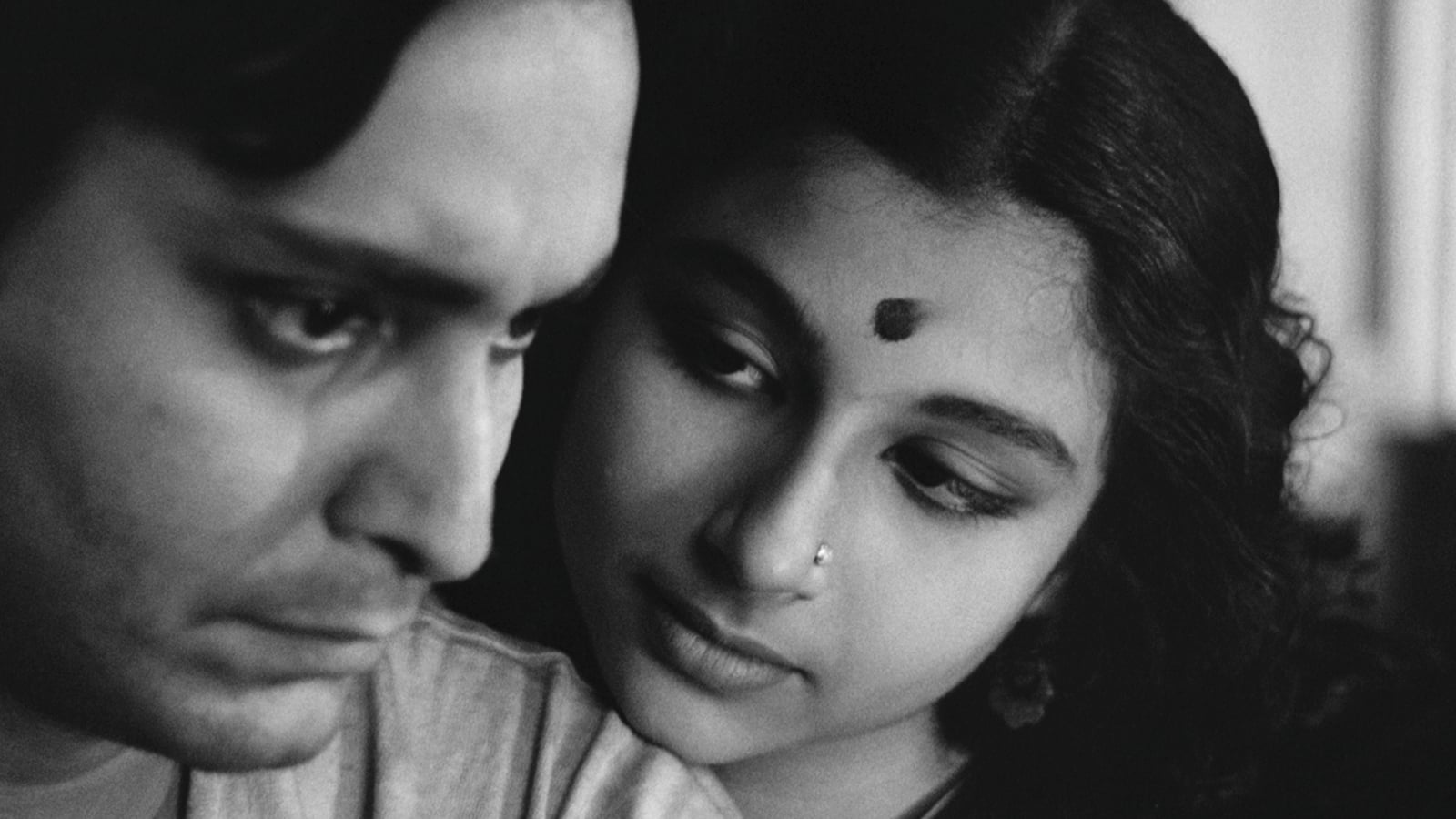
By this third instalment of the adventures of “Apu” (now Soumitra Chatterjee), I was already quite fond of him. He has to shake off the last vestiges of his student years and find himself a job. Even with a teaching qualification this aspiring novelist finds that’s easier said than done but he gets by, delaying settling his seven rupee a month rent for as long as he can, and living cheaply. Then his friend “Pulu” (Swapan Mukherjee) introduces him to his sister “Aparna” (Sharmila Tagore) and the direction of his life takes quite an heartfelt change in direction. Before long they are married, she has become pregnant and has left to spend the tail end of her pregnancy with her wealthier parents. Before he has a chance to join them, a tragedy ensues that affects the young man profoundly. Unable to face his grief he takes to the road on a pilgrimage of sorts, only a directionless and purposeless one. A chance encounter with “Pulu" a few years later reminds him of his obligations to his young son “Kajal” (Alok Chakravarty) who has been brought up by his grandfather, but can “Apu” bear to see the child that robbed him of his true love? Moreover, even if he should decide to make contact, who’s to say the youngster will want to engage with a total stranger? Whatever you do, don’t watch the colourised version of this. Seen in monochrome, it offers us beautifully crafted and characterful drama that lavishes it’s humanity on us. Chatterjee juggles his roles as lovestruck young man becoming grief-stricken wanderer perfectly, without melodrama or sentimentality and the courting scenes with Tagore are really quite delightful to observe, as is his reading of her lovingly threatening letter. The location photography captures the poverty in which most people live as well as the beauty of their surroundings well, and then the camera turns effortlessly in onto the characters as his travels expose this vulnerable young man before our eyes. As with many of Ray’s films, it keeps the story tight and it also clearly extols the virtues of education and of appreciating self-worth - without “Apu” becoming in any way self-obsessed. I was actually quite sad as we reached the end. Not because anything unpleasant happens, but because I felt that I’d like to have known what happened next for “Apu”.