The Blood on Satan's Claw
After a landsman in 18th century England discovers a corpse covered in fur buried in a field, the town becomes infected by "the devil's skin," leading the local children to engage in demonic rituals and criminal behavior.

John Chard@John Chard
Tigon's Talons.
Out of Tigon Productions comes The Blood On Satan's Claw. Directed by Piers Haggard (who co-writes with Robert Wynne-Simmons) it stars Patrick Wymark, Linda Hayden, Barry Andrews, Michele Dotrice & Wendy Padbury. Story is set in rural 17th century England and sees a village fall under demonic possession after a living one eyed skull is unearthed by the local ploughman.
Well it's quite a title the film has got, the sort that conjures up many a blood curdling image. Yet it's some what misleading, but in a good way. There is indeed claws involved, and definitely "Old Nick" is part of the equation, but Haggard's film is more moody and quirky than the title suggests. It has definite links to Tigon's flag bearer, "Witchfinder General", though not nearly as clever or as brilliantly cruel as Michael Reeves' film. We are in the company of Wiccan ceremonies and satanically influenced children, throw in some sexually charged dalliances and we are good to go. Hell there's even some smarts in the writing about class distinction and snobbery.
However, the first half of the piece is more rewarding than the last half. The atmosphere and eerie thematics give way to standardised jolts and gore, with a finale that just comes off as slow-mo silliness that doesn't befit the earlier build ups in the script. The music (Marc Wilkinson), photography (Dick Bush), costumes (Dulcie Midwinter) and the acting (particularly petticoat terror Hayden) are of a very high standard. It's such a pity that the director loses sight of the tone marker set and fails to see it through to a satisfying conclusion. Still, it's definitely one of the better British horrors from the 70s - with eye catching period detail and a haunting poetic feel for the most part, The Blood On Satan's Claw is a safe recommend to those that like a bit of Witchcraft and Satanism in their horror diets. 7/10

Wuchak@Wuchak
***Creepy, unsettling, unconventional, realistic and artistic, but also tedious***
In the early 1700s, devil worship rears its sinister head in a village in England. Barry Andrews (who looks like Roger Daltrey) plays the young man who initially acquires evidence of the deviltry while Patrick Wymark plays the investigator and Anthony Ainley the minister. The young females include Tamara Ustinov (Rosalind), Linda Hayden (Angela), Wendy Padbury (Cathy) and Michele Dotrice (Margaret).
When you think of 60s-70s British horror you automatically think of Hammer Films, but Tigon’s “The Blood on Satan’s Claw” (1971) doesn’t have that Hammer or Amicus vibe; or even American International. It’s avant-garde, inventive and lifelike with a harrowing pervasive dread. Unfortunately, it’s also tedious, particularly during the first half.
One sequence is especially unsettling and remains controversial to this day. However, it was preceded by non-horror films with scenes that were even more unsettling and controversial, like Roger Corman's "The Wild Angels" from five years earlier, which showed a bike gang beating up the kindly minister who performed the funeral of their fallen comrade, as well as totally trashing his sanctuary (!). Then two of the bikers cruelly rape their dead comrade's girlfriend (!). To top it off, they outrageously abuse his corpse at the funeral party (!!). "Last Summer" (1969) is another example, masquerading as a teen beach drama. So, while a certain scene in "Blood on Satan's Claw" is effectively unsettling, other movies outside the horror genre had already paved the way.
The film runs 1 hour, 37 minutes, and was shot just west of London at Pinewood Studios, Iver Heath, Buckinghamshire, and places nearby, like Oxfordshire.
GRADE: B-

FolknHell@FolknHell
Few films make their intentions quite as efficiently as *The Blood on Satan's Claw*. Ralph ploughs an apparently ordinary field, turns over something that should have remained underneath it, and finds a decayed skull with a living eye staring back. Rural idyll, meet problem.
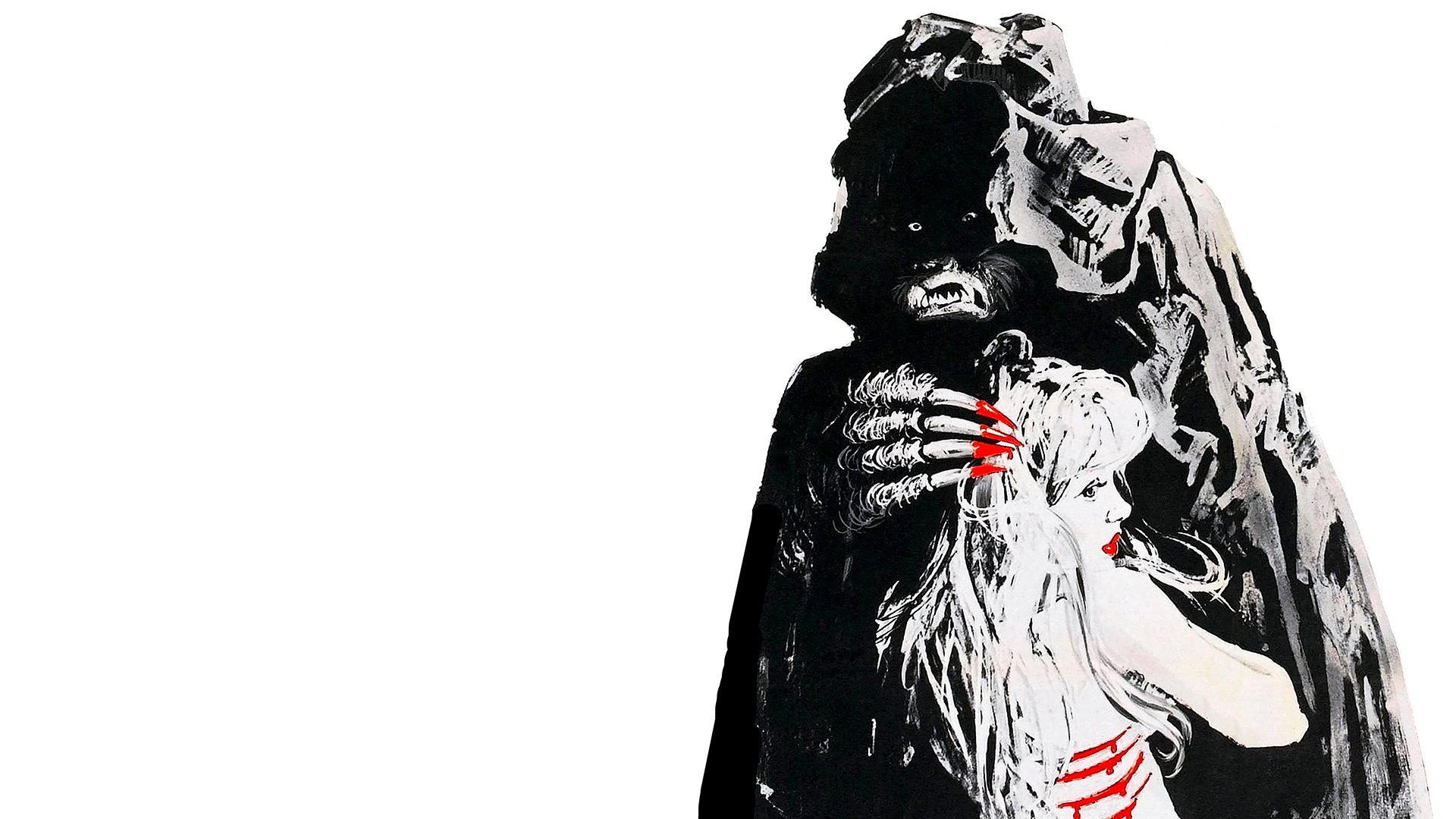
That image does an enormous amount of work. The evil here is not arriving from somewhere else. It is unearthed. Something buried beneath the landscape has been disturbed and, from that point onwards, the village seems to grow Satan rather than merely encounter him. Hairy patches and claws appear on human bodies, pieces are harvested, and the local children gradually become a coven constructing something far nastier than an unsupervised youth club.
The film itself is almost as strangely assembled. Characters who initially appear central simply disappear, emotional consequences are frequently brushed aside, and scenes sometimes linger a beat beyond the moment when they seem to have finished. Its origins as a portmanteau story remain visible in the joins. At times *The Blood on Satan's Claw* feels less like a narrative unfolding than several excellent horrors being persuaded to share a field.
But some of those horrors are extraordinarily effective. Angel Blake's manipulation of the Reverend is deeply uncomfortable, precisely because the film refuses to make it safely theatrical. The violence among the children becomes similarly horrible as play, sex, ritual and murder collapse into one another. Even the adults offer precious little moral refuge. They lock people away, leap eagerly to accusations and drown a suspected witch, then apparently regard the matter as settled. The children may be inventing their own laws in the woods, but the grown-ups hardly arrive carrying an unimpeachable alternative.
And this is where the film's reputation makes sense. Isolation, landscape, inherited evil, religious authority, ruined places, corrupted youth and something ancient pushing physically through the soil are not decorative folk-horror furniture here. They are the machinery of the film.
It is disjointed, abrupt and sometimes downright peculiar. Yet the more coherent films that followed have spent decades borrowing its grammar. *The Blood on Satan's Claw* may wobble as drama, but as an image of folk horror clawing its way out of the English earth, it remains horribly difficult to dislodge.
---
Reviewed by FolknHell, the folk horror film podcast · folknhell com
Hear the full FolknHell podcast discussion of The Blood on Satan's Claw: folknhell com/the-blood-on-satans-claw-1971-review along with our other reviews, transcripts and episodes.