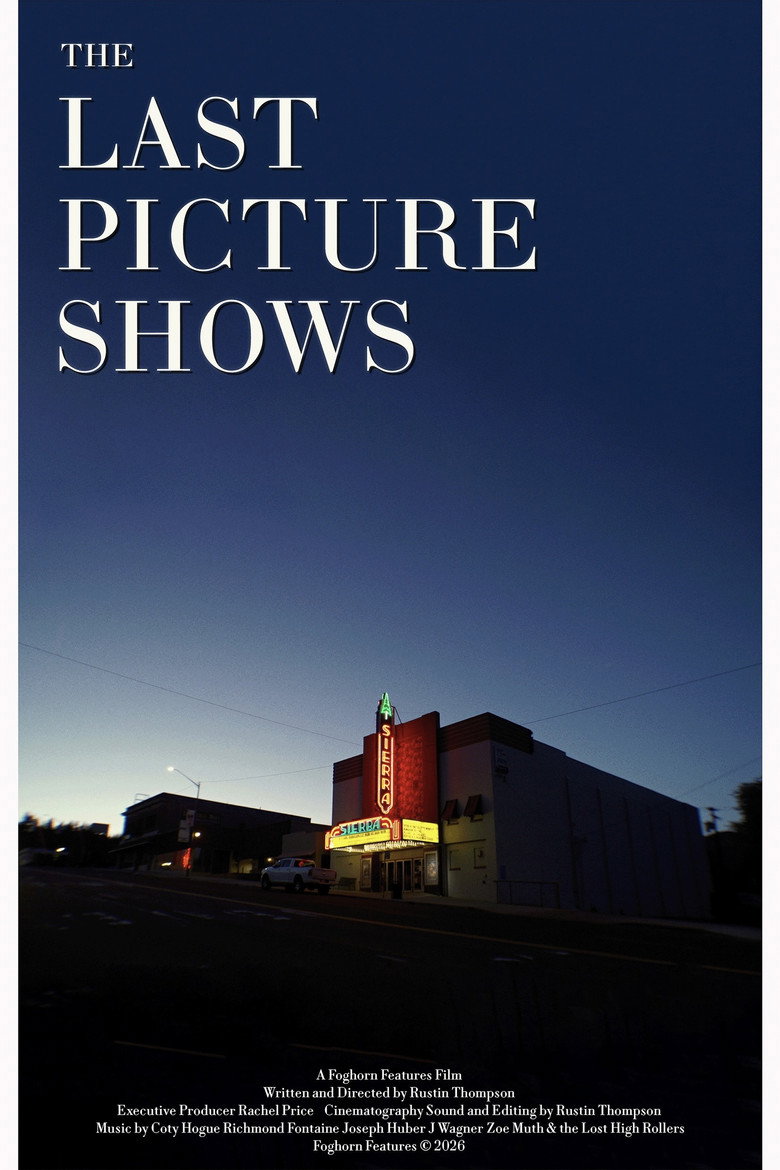
The Last Picture Shows
Ten states. 10,825 miles. 123 theaters. In his latest feature The Last Picture Shows, filmmaker Rustin Thompson journeys into the American West on a search for traces of what was once a center of small-town life: the movie theater. On the trip, he finds long abandoned and forgotten cinemas; movie houses that have fallen into disrepair; theaters recently closed, theaters struggling to hold on, and theaters that—thanks to their thoughtful caretakers—are not only surviving but thriving. Between the stops along the way, Rustin poetically intersperses excerpts from Peter Bogdanovich’s 1971 classic film The Last Picture Show, as well as reflections on past and present hardships facing the film exhibition industry. The Last Picture Shows reminds viewers that even in vast cinema deserts, there are oases of community and gathering that remain, where the movie house continues to be a place of wonder, contemplation, and connection.

The Fixate & Binge Podcast, w/ Joe Curdy@fixateandbingepodcast
As a kid, I will always remember one evening when my late father announced that he was "taking the boys to the pictures." The evening was a double-feature -- HIGH NOON (1952), starring one of his favorite actors, Gary Cooper, and SHANE (1953), starring Alan Ladd. I later learned that Dad had been eagerly waiting for the opportunity to see two of his favorites back on the Big Screen.
My three brothers and I climbed into the family Chevy Suburban -- and accompanied Dad to the Roxy Theatre in downtown Hamilton, Montana for an evening I would never forget.
This memory is over 45 years old.
But it vividly came rushing back while watching acclaimed writer-director Rustin Thompson's documentary THE LAST PICTURE SHOWS.
The tagline for the film confirms "10 states; 10,825 miles; 123 theatres" -- with Thompson taking audiences to bucolic, forgotten towns in the American West, far from the hustle and bustle of cities and sprawling suburban concrete jungles.
The effect of focusing on small-town American western locations is sometimes haunting, and funereal in its sadness as dozens of theatres are shown closed, derelict, and abandoned.
But hope springs eternal -- with Thompson interviewing dozens of committed business owners and community-minded individuals who are hanging on and unwilling to let their shared history go gently into that good night.
Defying an industry that has increasingly shown ambivalence toward the small-town theatre experience while paying deference to digital multiplexes around the country to maximize profits -- THE LAST PICTURE SHOWS restores something that has been steadily disappearing: the memory of why these places mattered.
Because movie theatres were never simply buildings where movies were shown.
They were places where fathers took their sons. Where strangers sat shoulder-to-shoulder and laughed, cried, cheered, and occasionally sat in stunned silence together. They were places where a child could walk in expecting to be bored by an old black-and-white Western -- and walk out having discovered something that would stay with him for the rest of his life.
That's what Rustin Thompson has captured so beautifully in THE LAST PICTURE SHOWS.
And perhaps that's why, more than 45 years later, I can still remember my father saying, "I'm taking the boys to the pictures."