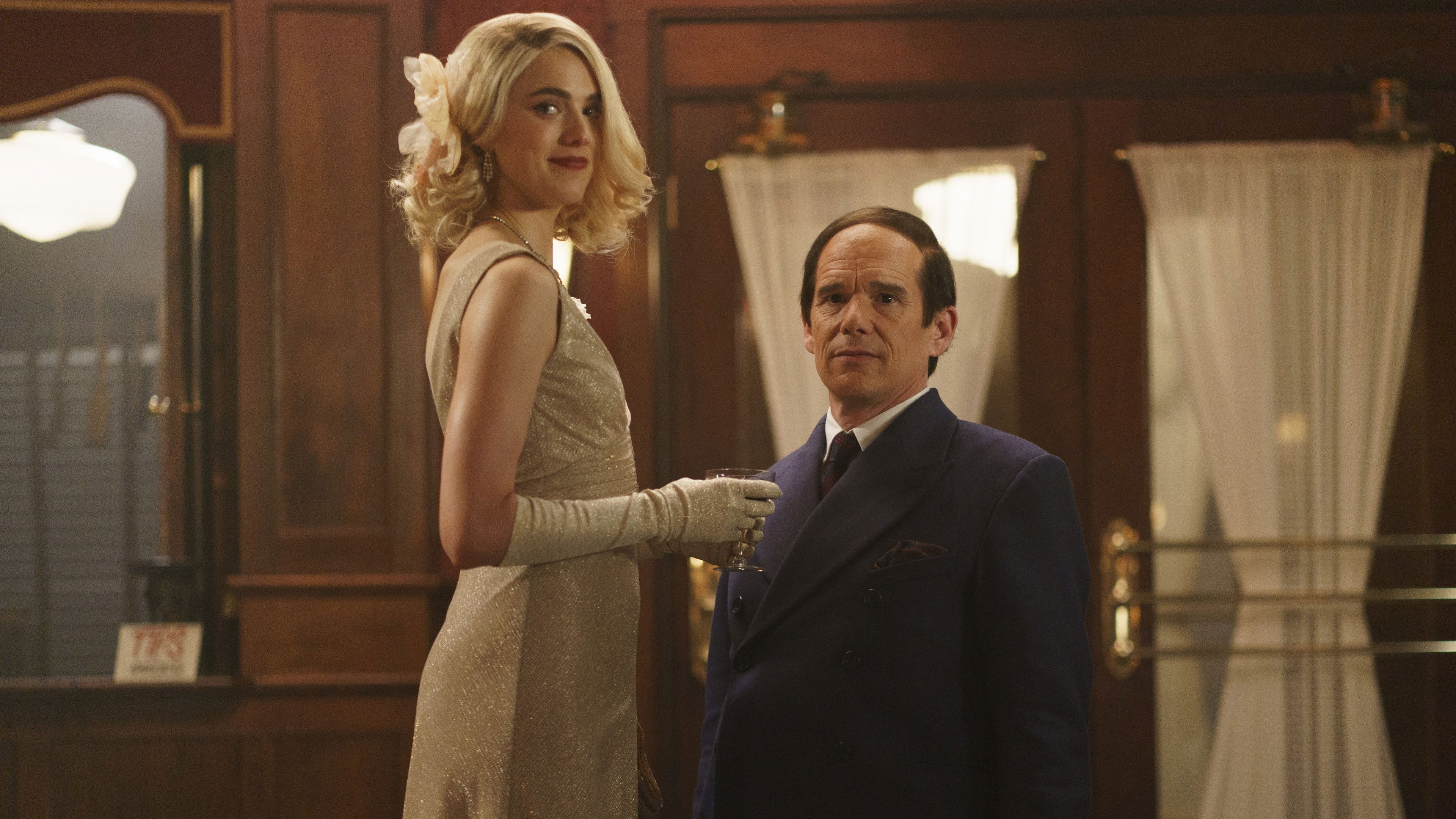
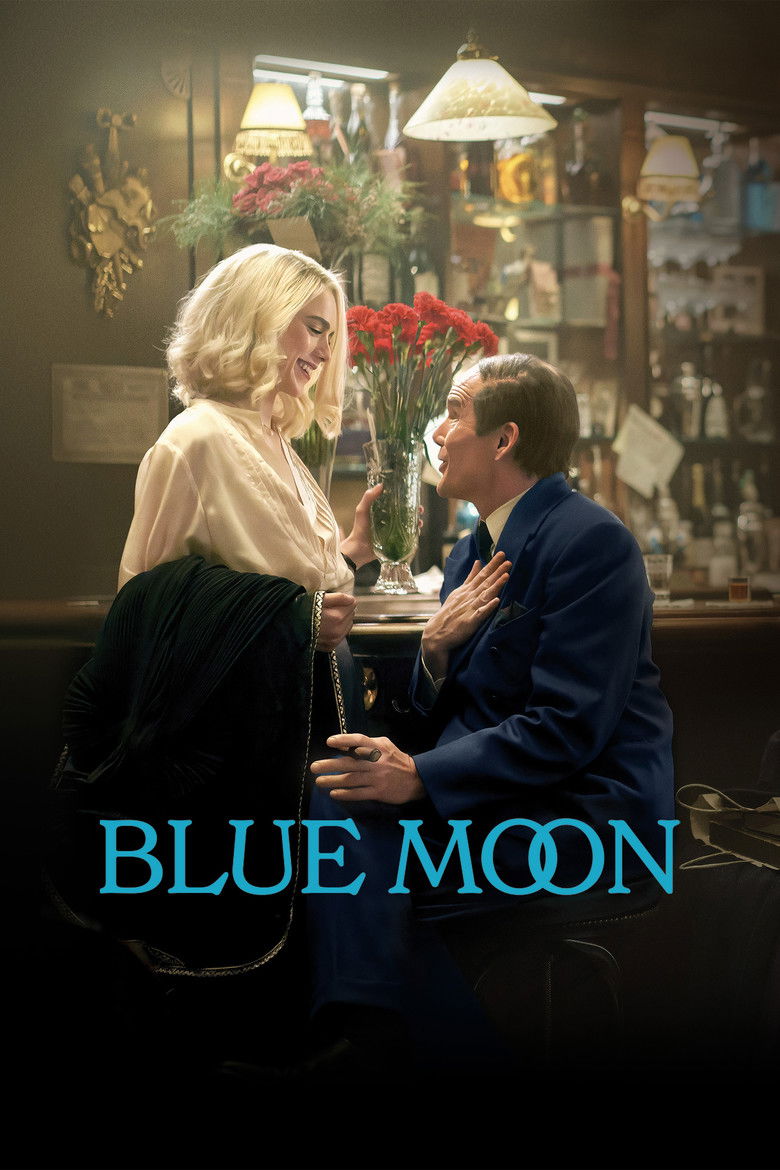
If this doesn’t get Ethan Hawke some statuettes this coming winter, then I don’t know what will. He is on great form delivering a pithy series of monologues as if he really were the renowned lyricist Larry Hart. Most of this is told by way of his chat with his favourite barman “Eddie” (Bobby Cannavale) whilst he is waiting for the after show party for “Oklahoma!” to begin. He had famously worked with Richard Rodgers (Andrew Scott) for many a year, but this latter man had become tired of his booze-driven histrionics and so teamed up with Oscar Hammerstein II (Simon Delaney) for this latest offering. Now right from the start, I rather liked the enigmatic and flawed Hart. Not least because his critique on “Oklahoma!” is perfectly summed up by his description of an elephant marauding the corn fields of the USA getting poked in the eye by an ear. Just in case we do need some reminding of his previous successes, “Knuckles” (Jonah Lees), gently serenades us with some piano accompaniment as a few additional conversations with the likes of acclaimed writer EB White (Patrick Kennedy), his ambitious muse “Elizabeth” (Margaret Qualley) and, of course, with his erstwhile partner play out with varying degrees of honesty and/or self pity. I actually felt that though doubtless with just cause, it was Scott’s subtle yet devastatingly brutal effort as Rodgers that ensured that he actually came across as a rather unfeeling and ungrateful character as we all see the obvious despair on the face of an Hart who is struggling to deal with his isolation and his lack of relevance. How the mighty are falling. The dialogue is sharp and witty and the whole production shines quite a light on what it is to become yesterday’s man. There are allusions to his sexuality, but these are wrapped in a more sexually confused depiction of a man who felt that he could find beauty in man or woman, and again that ambiguity is well crafted by an Hawke who manages to combine our feelings of sympathy for his character with those of irritation. In many ways this looks like a cinema presentation of a theatrical enterprise, and is delivered in segments that could easily have been lifted directly from the stage, but in this case that structured form of scene-based storytelling seems all the more apposite and I really quite enjoyed this.
Lyricist Lorenz “Larry” Hart (1895-1943) may not be a household name to many, but his voluminous catalog of works written with composer Richard Rodgers (1902-1979) – a bona fide compendium of American musical standards – reads like a laundry list of this country’s most beloved favorites, including “The Lady is a Tramp,” “Bewitched, Bothered and Bewildered,” “My Funny Valentine,” “Isn’t It Romantic?” and, of course, the pair’s biggest sensation, “Blue Moon.” But, for all of Hart’s artistic successes, he led a turbulent professional life and a lonely, largely unhappy personal life, perhaps best exemplified by the events of March 31, 1943: opening night of the musical Oklahoma!, the smash hit collaboration of Rodgers and his new lyricist partner, Oscar Hammerstein II (1895-1960). Rodgers teamed up with his new colleague after Hart, a hopeless alcoholic, became too unreliable to work with. This change represented a devastating blow to the prolific lyricist, especially when the new duo’s musical was showered with rave reviews, the revelation of which Hart witnessed firsthand at the opening night party for the show, held at New York’s legendary Sardi’s restaurant. The foregoing events thus provide the foundation for director Richard Linklater’s latest offering, a re-creation of that evening’s tension-filled festivities in which a hapless and sometimes-hysterical Hart (Ethan Hawke) is buried under a pile of deflating professional disappointments, including emotionally intense exchanges with Rodgers (Andrew Scott) and a genial but largely unsuspecting Hammerstein (Simon Delaney). But, if that weren’t enough, Hart suffers personal setbacks, too, particularly in his efforts to win the affections of 20-year-old Yale co-ed Elizabeth Weiland (Margaret Qualley), a platonic friend whom the 47-year-old would-be suitor hopes will accept his sincere (albeit overzealous) romantic advances. (According to the film’s production notes, it’s not clear if Larry and Elizabeth actually met at this event, but the screenplay postulates what might have transpired if they had. And, even if they did, wooing her would have probably been a tall order for a “bachelor” widely believed to be closeted gay man, one of New York society’s biggest open secrets.) Through all of these ordeals, Hart struggles mightily to maintain his composure with an endless stream of shots, all the while pouring out his feelings to his friend and Sardi’s bartender Eddie (Bobby Cannavale), author and fellow restaurant patron E.B. “Andy” White (Patrick Kennedy), and barroom pianist Morty Rifkin (Jonah Lees). In telling this multilayered story, the dialogues among this cast of colorful cohorts cover a wide range of subjects and are tinged with an array of moods from bawdy to heartfelt to hilarious to cringeworthy, a true rollercoaster ride of emotions. However, what really brings this material to life is the depth of feeling exhibited by the gifted ensemble, especially Hawke, who handily delivers the best performance of his career, as well as fine turns by Qualley, Cannavale and Scott. And, even though the film is essentially shot on one set, the exquisite production design, with its re-creation of the legendary New York nightspot, keeps the picture fresh without ever appearing the least bit stagey. Of course, a movie about a musician wouldn’t be complete without a fitting score, as is the case here with its excellent repertoire of works featuring the likes of Jerome Kern, George Gershwin, Irving Berlin, and, naturally, Rodgers & Hart. Admittedly, as the film plays out, some might see the narrative as somewhat repetitive and perhaps even exhausting to watch, contentions that arguably have some merit. Some have also criticized some of the picture’s open exchanges about homosexuality, something that likely wouldn’t have occurred in 1943, a time when same-sex acts were still criminal offenses that most closeted individuals wouldn’t have dared bring up in public. Nevertheless, “Blue Moon” is otherwise an absorbing tale, a tragedy in the truest sense of the word set against a prototypically American backdrop. It’s truly sad that someone who gave us so much also had to endure so much pain, even if some of it was self-inflicted. Indeed, under circumstances like these, then, it should come as no surprise that the moon in a setting as sad as this would be any color other than blue.