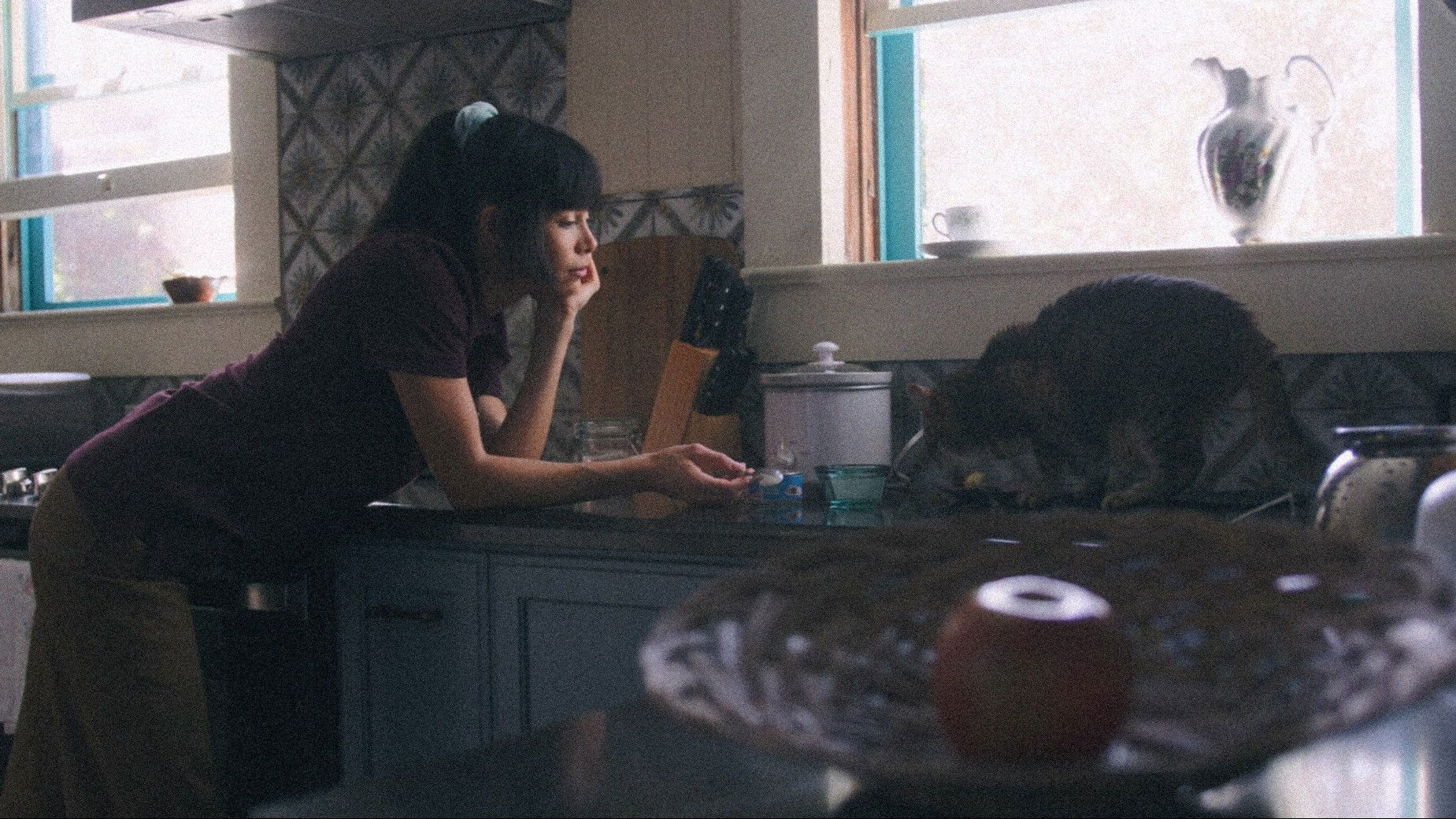

Chaperone
Set in rural Hawai’i and featuring an entirely AANHPI cast, Chaperone follows Misha, an unambitious 29-year-old woman who finds a dangerous acceptance in a bright 18-year-old athlete who mistakes her for a fellow high school student.

The Fixate & Binge Podcast, w/ Joe Curdy@fixateandbingepodcast
One of the great social developments in Western society is the freedom individuals have to buck cultural mores, and take their own paths.
Largely gone in Western society are the rites of passage that designate what makes a child an adult beyond physical age and legal accountability. Tradition may have once dictated these signposts -- but that, too, is giving way to individual freedom.
When it comes to Hawai'i, speaking from personal experience -- time passes almost imperceptively -- with no discernible shift in the seasons to signal change, no obvious ebbing and flowing of the transitory nature of time. The leaves do not fall. The grass stays green. The sun sets as it always has in its place month after month. And time, merely passes.
In writer and director Zoë Eisenberg's **CHAPERONE**, we are introduced to Misha (Mitzi Akaha), a single 29-year-old living in a small, bucolic Hawai'i village (Hilo suburbs?), working -- as she has since her high school days, at a local, fledgling arthouse movie theater. With her life seemingly on cruise-control, Misha seems content to carry on in this relatively blissful state of suspended animation.
Akaha's portrayal of Misha, reminiscent of Mike Leigh's **HAPPY-GO-LUCKY** (2008) starring Sally Hawkins' -- also a 30-year-old, insufferably optimistic and cloyingly content Londoner whose outlook on life was exasperating to her peers, offers a genuine portrait of what arrested development looks like in Hawai'i.
Misha's longtime friend and co-worker Kenzie (Jessica Jade Andres) and brother Vic (Kanoa Goo) remain constant reminders that she should be challenging herself more and accepting the inevitable: she is 29 going on 30 and should start acting like it.
When Misha is confused for a fellow high-schooler during a meet-cute with 18-year-old Jake (Laird Akeo) -- she decides to carry on the ruse more out of defiance until reality superimposes itself with a series of terrible decisions when her reckless spontaneity catches up to her.
Eisenberg's script, direction and Akaha's Misha bring to life a sympathetic portrayal of single woman unable to freeze or reverse time or its consequences. The age-gap dynamic between Akaha's Misha and Akeo's Jake (whose on-screen chemistry charms) is expertly explored here revealing the cracks that signal the doomed trajectory of their coupling. It isn't quite as on the nose as **HAROLD AND MAUDE**, but as things begin to fall apart and the charade drops, there can only be sadness, disappointment for all involved.
With original music by Taimane (a talented ʻukulele performer for whom we share a mutual contact) -- and a full cast of AANPHI, shot on location in Hawai'i -- I highly recommend this coming-of-age story -- both for its brilliant, nuanced direction, and for Akaha's fantastic and sympathetic performance of a young women more sinned against than sinning.