November 11, 2001
Season 1
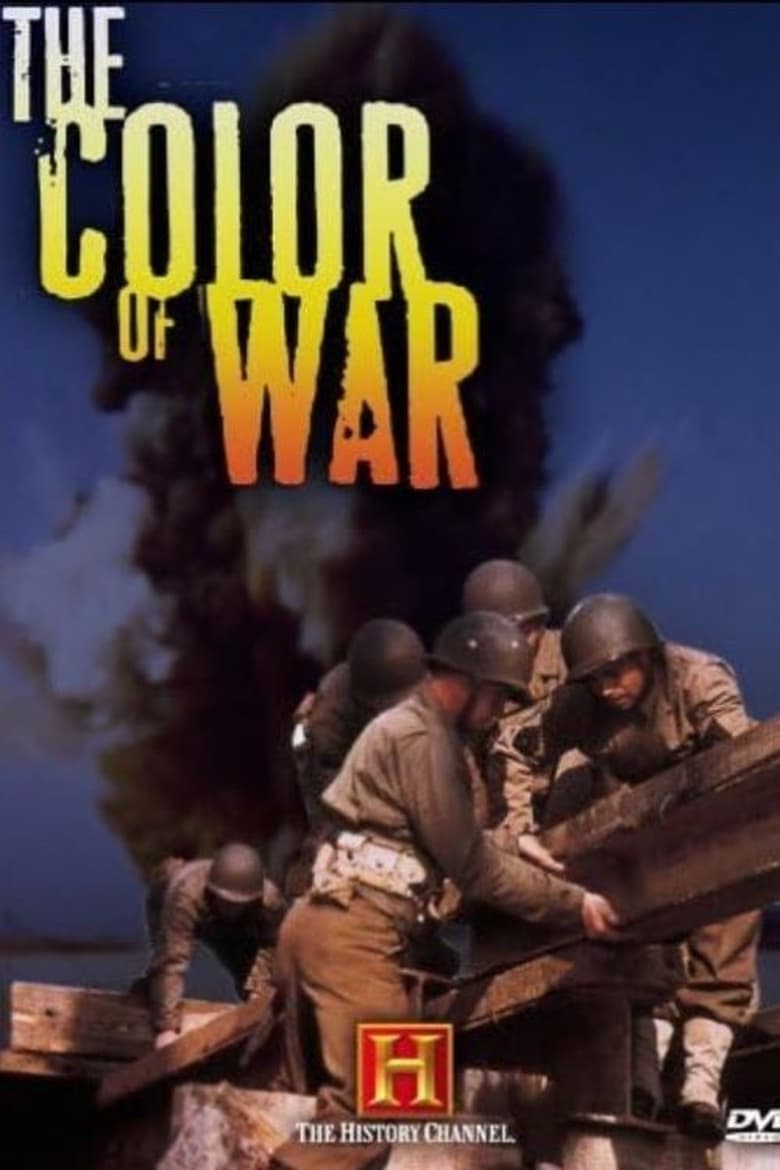
A series featuring actual color footage of World War II.
A series featuring actual color footage of World War II.


Five out of every six men serving in WWII never saw combat, serving instead in the vast support services. But the men who were at the front lived through some of the greatest horrors of the human experience. For them, survival was all--surviving getting to the front, surviving attack, surviving combat. This episode reveals their constant struggle to stay alive. Peter Coyote narrates this compelling journey into WWII through the eyes of those who lived it, completely in color.

Of all the assignments a serviceman might find himself undertaking in WWII, flying seemed to offer the greatest promise of glory. What was not initially apparent was that flying would become the most dangerous job of the war. A flyer had less chance of survival than any other serviceman in any other branch of the military. Peter Coyote narrates this compelling look at the air war through the eyes of those who lived it, with rare color footage and interviews with Army Air Corps and RAF veterans.

A WWII infantryman was engaged in combat for an hour each day on average, but he fought the environment around the clock, from the Arctic Circle to desert sands and fetid jungles.

WWII veterans describe their brief interludes of "everyday" life while at the front, with intimate films from archives and personal collections illustrating their treasured wartime memories.

For the sailors who fought in World War II, combat at sea differed radically from any previous conflict. The jobs they performed were far more complex and technically more demanding than ever before, and the threats they faced were much more lethal. Utilizing vivid color film and photographs unearthed from archives and personal collections, along with firsthand accounts from veterans, we recall the remarkable true stories of these sailors and the battles they fought.


As WWII raged across Europe and the Pacific, one branch of the U.S. military went quietly about its business, moving with such secrecy that it was dubbed the "Silent Service". The elite submarine sailors endured an unique type of battle--with little chance of escape if disaster struck, the submarine itself often became a steel coffin.

The millions of combatants in the various armed services of WWII bore the brunt of the devastating war, but the civilian populations of the countries involved also endured their share of hardship and sacrifice. We see how they bravely shouldered their duties and suffered overwhelming burdens as their homelands were embroiled in "total war". WWII comes alive through a moving tapestry of letters, diaries, color film and photographs unearthed from archives and personal collections.

Even as WWII raged on, another, more desperate, battle was being waged just behind the front lines...a battle to save lives. The victories and losses of this crusade are the stories of the price of war. The fact that so many servicemen lived to tell the tale is a testament to the brave medical personnel who fought daily against death. WWII comes alive through a moving tapestry of letters, diaries, color film and photographs unearthed from archives and personal collections.

For Allied servicemen, the last year of WWII proved the most difficult. Though victory was nearly assured, some of the roughest battles lay ahead. These men desperately wanted to return to home and loved ones. If they survived, what would the peace bring? WWII comes alive through a moving tapestry of letters, diaries, color film and photographs unearthed from archives and personal collections.

After the unconditional surrender of Germany and Japan in 1945, the U.S. emerged as leader of the free world. In the aftermath of the war, U.S. servicemen faced daunting new responsibilities and perhaps a greater challenge than waging war--that of keeping the peace. We examine this monumental undertaking known simply as occupation. WWII comes alive through a moving tapestry of letters, diaries, color film and photographs unearthed from archives and personal collections.
WWII was the first fully mechanized war--with soldiers in tanks and other armored vehicles pounding across a lethal, modern battlefield. But the very importance of these vehicles to the new tactics of battle also made them vulnerable magnets for enemy fire, often exposing their crews to even greater risks than those faced by infantry soldiers. In this episode of our award-winning, all-color series, we bring to life the experiences of soldiers who manned the machines of war.

WWII's unsung heroes, combat engineers paved the way to victory in every theater of operations. From Navy Seabees who built airfields on remote coral outcroppings in the Pacific, to Army Engineers who cleared minefields in Europe and threw bridges across the Rhine in the teeth of enemy fire, to the men who dammed and drained an entire bay in the Aleutians to make room for a landing strip--these men were essential to the war effort.


Continuing the epic journey into the depths of WWII, our award-winning all-color series returns to recount stories unearthed from archives and personal collections of the "Greatest Generation". Narrated by Peter Coyote, this episode reveals the intimate relationship between a soldier and the tools of his trade--everything from the uniform that protected him from the elements to the weapons that protected him from the enemy to the insignia and medals that differentiated him from his comrades.