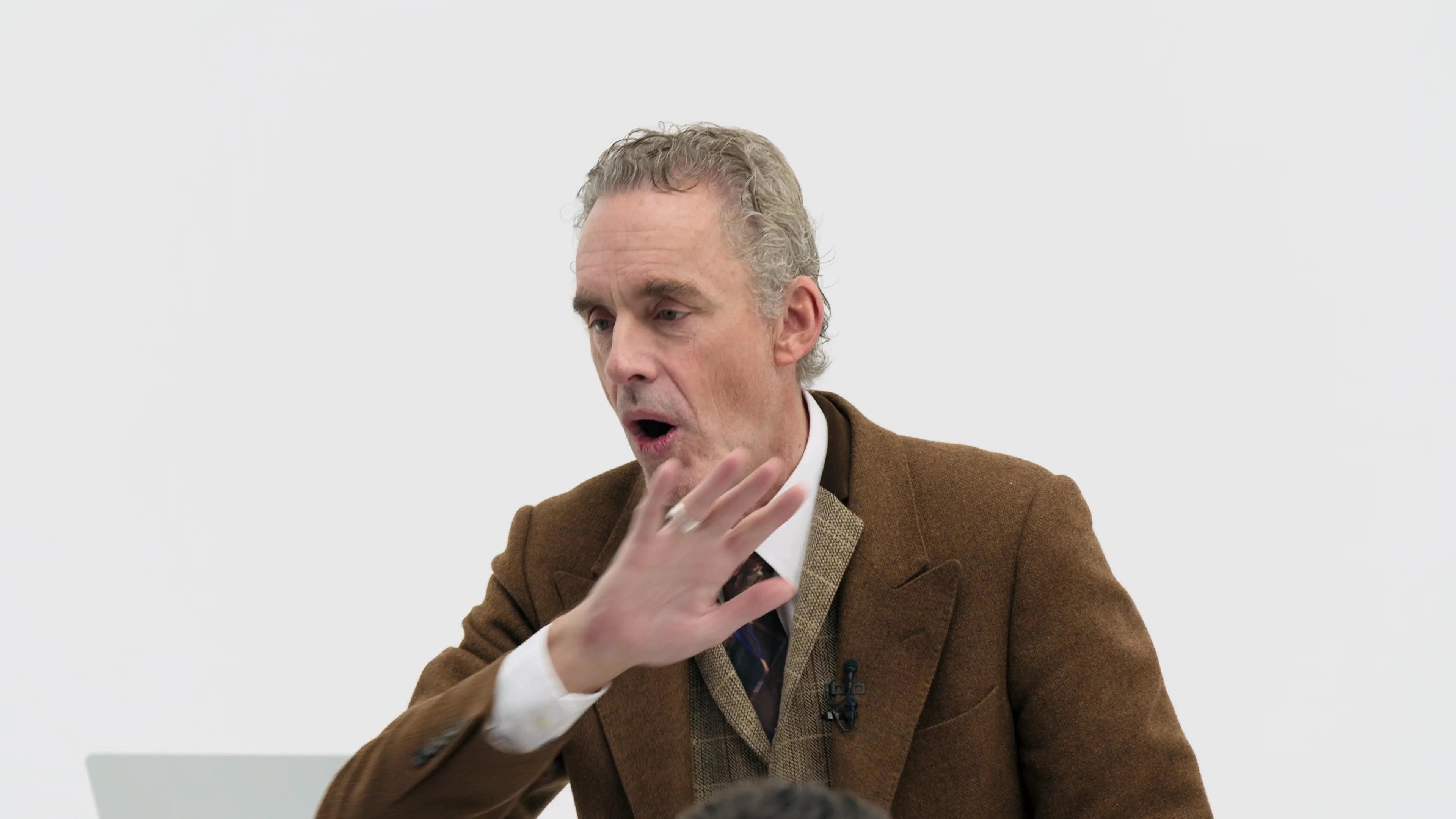
05. The Will to Power
In lecture five, we delve into Nietzsche's critique of the axiomatic presuppositions underlying human thought and the notion of the "I" as the source of thinking. We explore Nietzsche's idea that thoughts come unbidden, challenging the assumption that the subject "I" is the condition for the predicate "think." This leads to a discussion of the unifying spirit or will to power that Nietzsche posits as a potential replacement for the concept of God. We also touch on Jung's attempt to identify the commonality in narratives across cultures as a way to understand this central unifying structure. The lecture concludes by emphasizing that sanity is not merely an internal state but is related to one's optimal embeddedness in coherent systems of hierarchy and relationships.