July 12, 2026
The new season of "Noos - The Adventure of Knowledge" opens with director Christopher Nolan and Matt Damon, who, along with Alberto Angela, present their latest film, "The Odyssey," recounting the various aspects of both the making of the film and the extensive screenplay and reconstruction work involved in recounting the exploits of the mythological hero Ulysses. The focus then shifts to the theme of longevity and immortality with Professor Vittorio Sebastiano, head of an ambitious research project at Stanford University aimed at discovering the key to longevity from a medical and scientific perspective. Science philosopher Telmo Pievani also returns to discuss the ethical dilemmas surrounding the quest for immortality and the importance of aging for the human species.
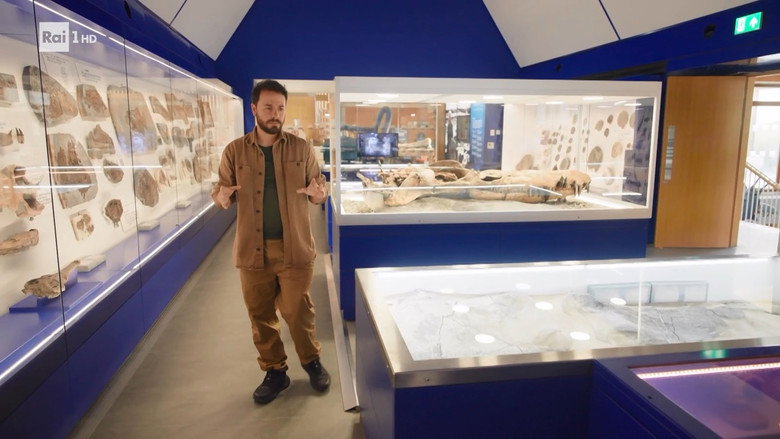
The cover of the new episode is dedicated to physical fitness, that is, a person's general state of health and well-being. When we're in good physical shape, we carry out daily activities with energy, efficiency, and without excessive fatigue. But what happens if we get out of shape? Dr. Anna Maria Colao, professor of endocrinology and metabolic diseases at the Federico II University of Naples, discusses obesity and health, starting from a fundamental premise: obesity is a chronic and recurring disease, and society must guarantee essential care and treatment services. Luca Parmitano, speaking from Houston, then discusses with Alberto Angela the thrill of being part of the Artemis III crew, the team of astronauts who will test new technologies in Earth orbit that will pave the way to the moon.
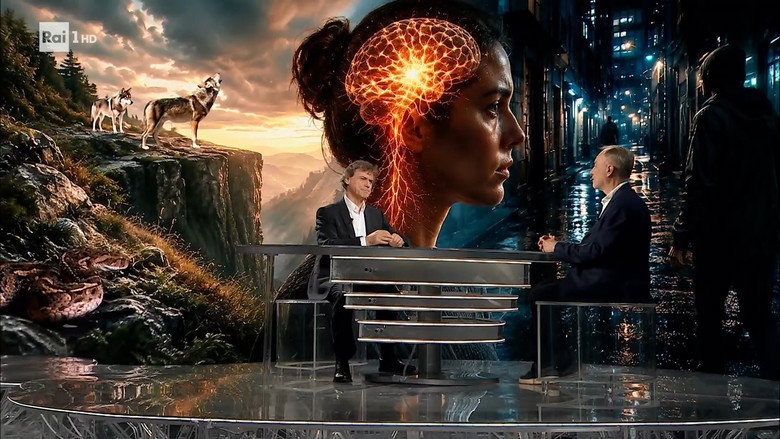
The cover story of this episode of "Noos" is fear: Giorgio Vallortigara, a cognitive neuroscientist at the University of Trento, explains what happens in our brains and bodies when we're scared. When discussing fear, the topic of courage inevitably comes up: Hervé Barmasse delves into this topic with Alberto Angelo, sharing how he manages fear and how he developed the ability to understand his own limits through direct contact with nature. Can a blockbuster like Checco Zalone's "Buen Camino" positively influence medical prevention data? This is what the Italian Society of Urology (SIU) has found over the past year, indicating that humor has become a powerful prevention tool, resulting in a significant increase in urological checkups and visits across the country.

Desires and addictions are the theme of the cover of the "Noos - The Adventure of Knowledge" episode. Professor Giovanni Martinotti, an internationally renowned surgeon and psychiatrist, explores why humans can develop compulsive, addictive behaviors over the course of their lives, which are difficult to break free from. On the topic, Emmanuele Jannini explains exactly what emotional dependence is. From passion to pathological obsession: can this condition be cured? Then, Professor Franco Locatelli and Dr. Fabrizio De Benedetti discuss CAR-T cell gene therapy and what this discovery means for thousands of patients and the future of medicine. Gabriel Zuchtriegel, director of the Archaeological Park of Pompeii, returns to share the latest discoveries from the ongoing excavations and offers an in-depth look at the Doryphoros of Polykleitos.

Childhood memories, faces, places, and emotions. In the early years of life, a child's brain develops decisively. This process begins even before birth, and the way we are cared for leaves its mark on our development and our sense of security. Educationalist Daniele Novara discusses this in the studio, explaining the stages through which a child begins to develop security and relational skills, and why the first three years of life are crucial for building basic emotional stability. This week, Carlo Lucarelli analyzes the investigation into Ted Bundy, the American serial killer who murdered schoolgirls. Massimo Polidoro warns of the dangers of deepfakes, used to exploit the image of unwitting celebrities to sell products of all kinds.